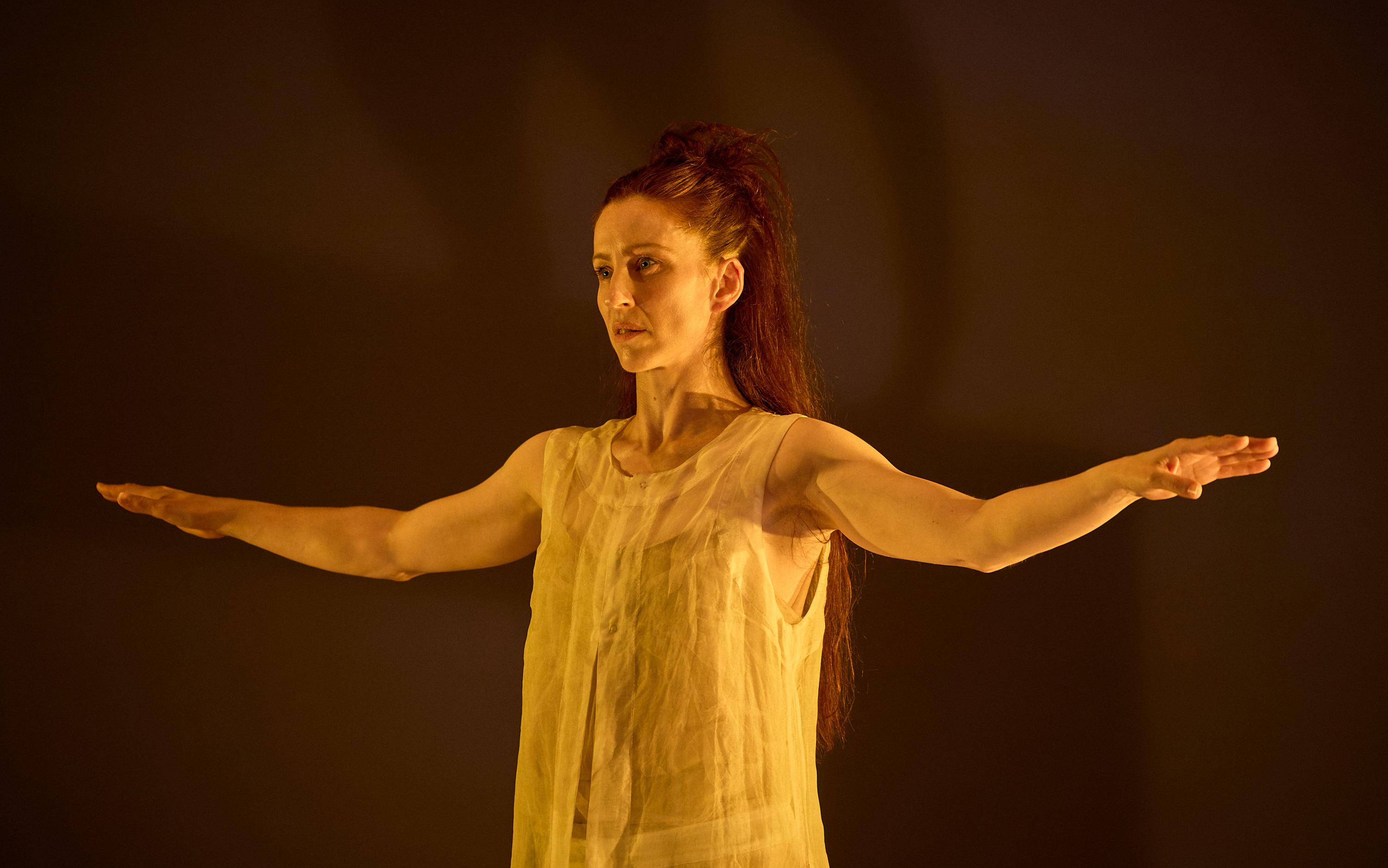
Exploring uncertainty, resilience and the precarious nature of the human body and natural world.
On Saturday 28 November, Burrinja presents ORBIT 2026: Future History and [ gameboy ], bringing two distinctive contemporary dance works to the Dandenong Ranges for one special evening.
Presented in partnership with Sydney Dance Company, Dancehouse and Australian Dance Theatre, ORBIT offers local audiences the opportunity to experience contemporary dance works that are more commonly presented in Melbourne's inner-city venues.
Ahead of the performance, Burrinja Creative Director and CEO Melanie Burge spoke with Gabrielle Nankivell, Lead Artist, Director and Choreographer of Future History, about the evolution of her work, the ideas that continue to shape it and what audiences can expect.
Where has the work been seen before?
Future History has only been seen for two short shows in Adelaide in 2021 at the Odeon Theatre. At that time, we were in and out of lockdown, so it was a strange time. Maybe 100 people saw it.
How has the work evolved since then?
Self-performed solo works are quite strange animals. More often, I make performance works with and on other people. The works I make for myself are quite different, but they contain traces of the work I make with others.
I was fortunate to receive an Arts SA Fellowship in 2019, when I did the research for Future History. Some of the original collaborators are based overseas. I lived and worked in Europe for nearly 15 years, so many of my foundational influences are from elsewhere.
The creative development process helped me learn more about how I collaborate with other people, the experiences we have that inform the work we make, and how we go about making it.
So much has happened between when I first made the work and now. Firstly, there was the pandemic and lockdown. I've gone through significant personal change, including an injury.
Coming back to the show now, amidst all the turmoil, both global and personal, has been very informative in looking at what the essence of the work is. I'm looking at cycles of uncertainty and the precarious nature of the human body and the natural world.
Making the work has clarified what resonates with other people. It started as a very personal project but has evolved into something much more global that resonates with more people. How precarious the world is, how precarious bodies are, and how resilient we are when they work together.
When there is threat and change, individuals, communities and societies hold on and let go, and they survive by being malleable. It's made me appreciate the humans around me more.
For someone who hasn't seen much contemporary dance, what words would you use to describe what they're about to experience?
Vulnerability is one. There's a realness to it. It can be really beautiful and really ugly, and it's maybe a little unnerving. There's a strange aspect to it.
What's been the most challenging part of making the show?
The remount is really challenging right now, coming back to it after five years away from it. The day I arrived in Sydney for the remount, it was raining hard. I had a fall and hurt my shoulder, so I'm having to be very patient about relearning something I haven't done for five years.
The shoulder injury was a strange little reminder of some of the themes of the show, including resilience and adaptation, and that paradox of "things could be heaps better, they could also be heaps worse".
Performing this show is physically hard, but it's harder mentally. A lot of the work is in the thought process, finding the states and keeping the mental rigour.
What are your ambitions for the show? Where would you love it to tour in future?
I'm really curious about how audiences in different places will respond to it. That will shape my ambitions for the work.
It's so adaptable. It's presented in three acts and is quite modular. I could imagine there being different contexts, maybe one act in three different places. Maybe it could be done outside, in an art gallery or in a lounge room. I had adaptability in mind when I started making it.
First, I'm curious to see how audiences respond to it and how it translates. I'm interested to see whether what's meaningful to me is meaningful to others.
What has it been like being selected for the ORBIT pilot program?
It's been pretty wonderful. My last solo show was made in 2011 through a touring program that used to be called Mobile States. That program has disappeared, and ORBIT has filled a major gap.
It's amazing that Creative Australia has got behind it. ORBIT has a strong basis. Everyone in the pilot will learn a lot about how it works and find ways to reach further into the Australian audience.
It's about building audiences and getting people to interact and connect with contemporary dance, which is inaccessible to a lot of people. I hope people will take a risk and see a show so the program can be successful.
Tell us about a couple of artists who have been a big influence on your artistic practice.
Luke Smiles, the composer of Future History. We've worked together for 20 years and made a lot of different shows together. He's a massive creative inspiration. The way we work together is really dialogic. We each move forward because the other one propels us.
Miranda July is a writer who segues into performance art. She's kind of indefinable.
I'm inspired by so many different artists in an intergenerational way. I'm inspired by students, emerging artists, established artists and idols. I think I'm pretty lucky generally with the people I get to work with.
Read our conversation with Amy Zhang about [ gameboy ] here.
Future History - Teaser, Vimeo
Join us for an evening of contemporary dance featuring Gabrielle Nankivell's Future History alongside Amy Zhang's [ gameboy ].
Two distinctive works, presented together for one night at Burrinja.
ORBIT 2026: Future History + [ gameboy ]
Saturday 28 November 2026 | 6.30pm | Burrinja Theatre
Tickets are now on sale.
Main image by Daniel Boud
Burrinja
09 Nov 26
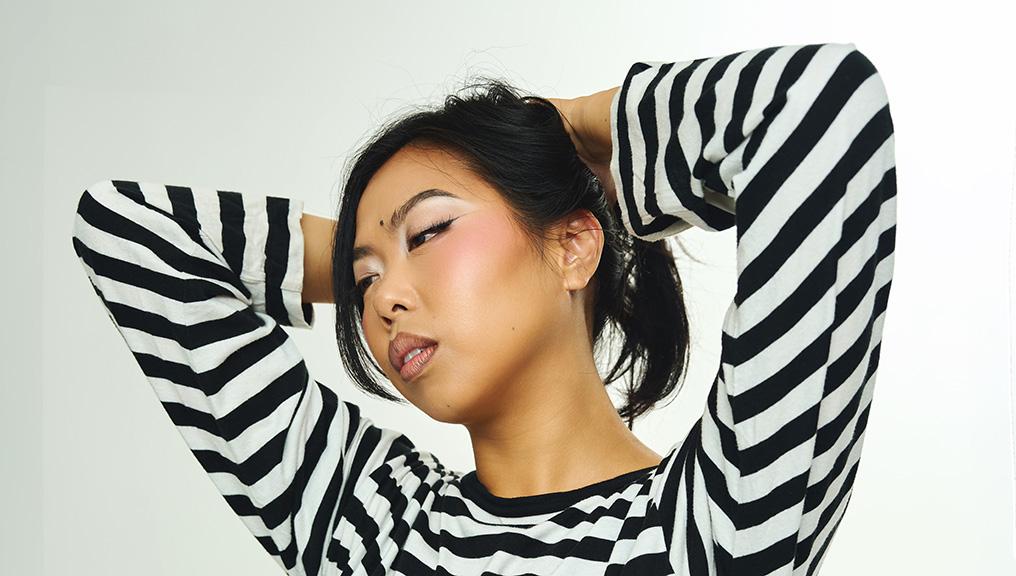
Absurd, funny and poignant. Discover the creative thinking behind Amy Zhang’s contemporary dance work. On Saturday 28 November,…
29 Jun 26
There are exhibitions that display art, and then there are exhibitions that bear witness to something far greater.…